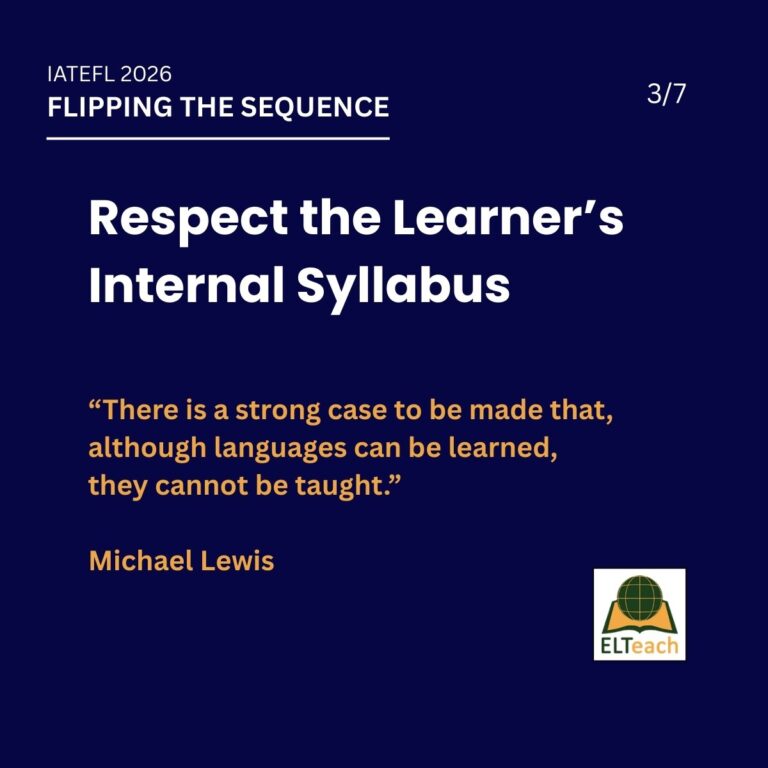
Language is a complex dynamic system. It can’t just be installed; it grows, emerging untidily and piecemeal as learners process input and attempt communication. Research into learners’ interlanguage shows that grammatical development tends to follow predictable sequences, a kind of internal syllabus.
As Bill Van Patten writes, “The role of communicatively embedded and comprehensible input is not a hypothesis in L2 acquisition… it’s a fact.”
That understanding messages is absolutely essential for building the language system is an idea that goes back to Stephen Krashen’s heyday.
We can further ask – how do we make that input compelling? What will learners do with the information they receive? Comprehensible input helps build the system, but opportunities for meaningful output help learners access that system, revealing gaps, and creating the need for them to hone and negotiate their meanings in interaction with each other.
Fluency-led approaches such as task-based learning (TBL/TBLT), by putting communication at the heart of lessons, are designed to co-opt and work *with* these processes.
The teacher’s role, rather than pre-selecting language to teach, then becomes something different:
👉 determining learners’ needs
👉 selecting and designing materials
👉 providing motivating activities in an encouraging environment
👉 responding to the learners’ developing language.
Teaching becomes less about controlling language development — and more about supporting it.
How does it change our practice if we lose this illusion of being able to control a learner’s interlanguage development?