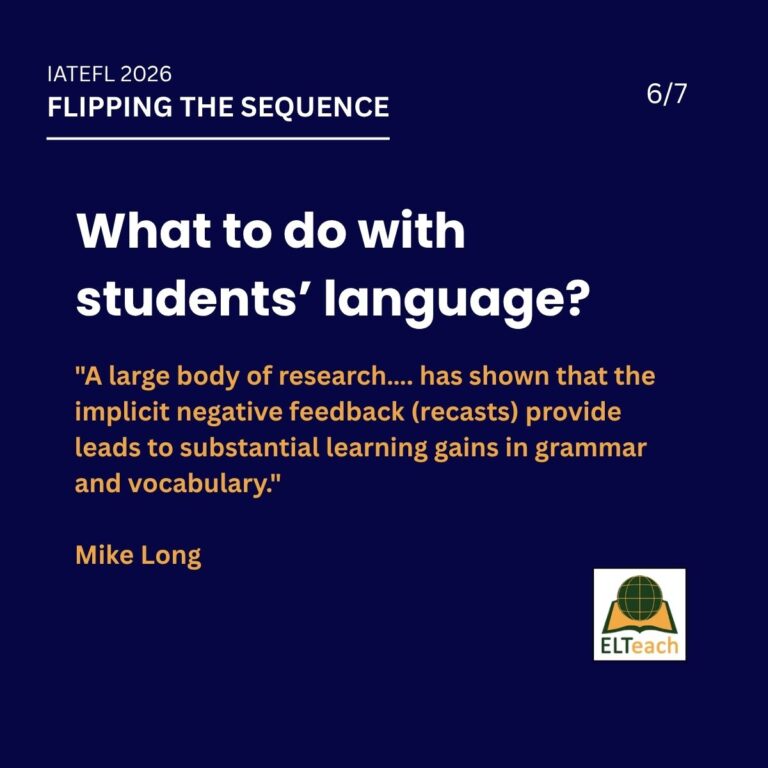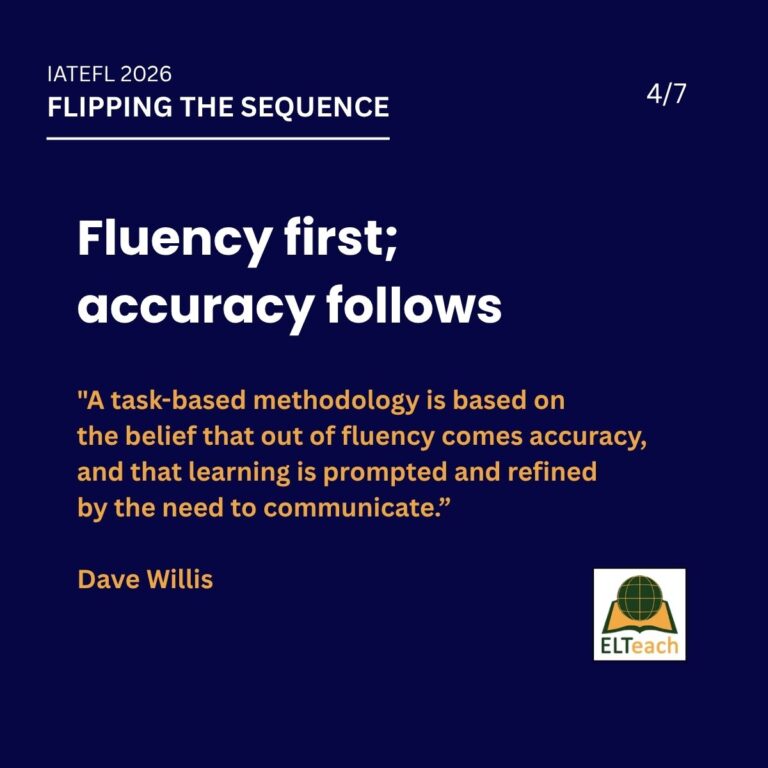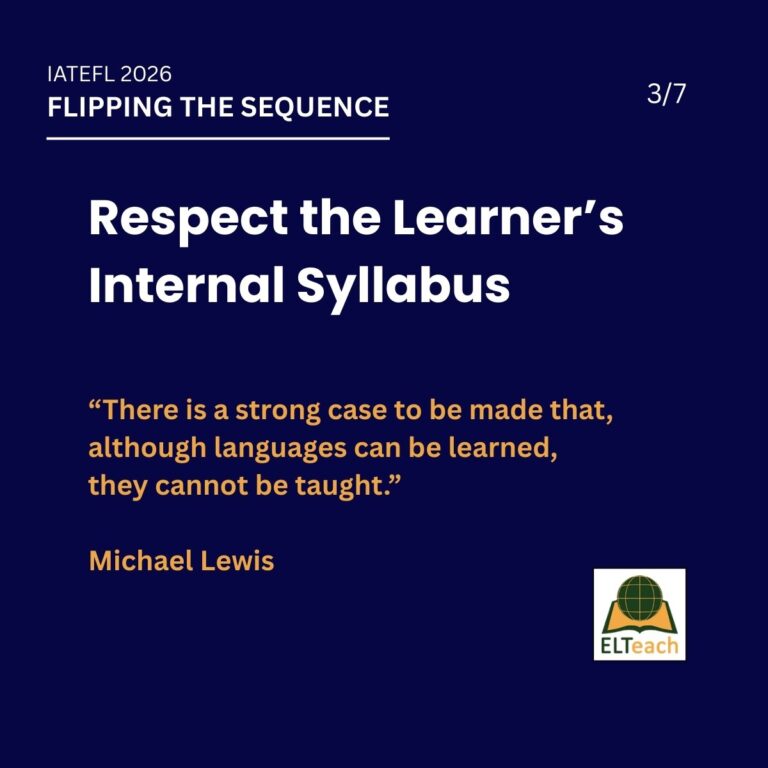
In this short series, I’ve outlined some of the advantages of fluency-led (or usage-based) approaches to lesson design, such as TBL, Dogme, and CLL.
To make the case for fluency-led teaching, the contrast between PPP is often made; and this often leads to coursebooks being (I think) caricatured.
Modern coursebooks typically offer a whole variety of material to be exploited in various ways: video, images, texts, kickstarter discussion questions, fluency-focused activities. They are, in effect, packed with meaning. Some even leave the more repetitive grammar practice activities till the end.
The problematic synthetic syllabus is still there, but it’s been sidelined.
Further, times have moved on from where teachers slavishly follow course books, or indeed teacher’s books. In courses like CELTA, part of the training is about how to select and adapt activities.
Dave & Jane Willis (2018) offer these criteria for evaluating coursebook activities
👉 Does the activity engage learners’ interest?
👉 Is there a primary focus on meaning?
👉 Is there an outcome?
👉 Is success judged in terms of outcome? Is completion a priority?
👉 Does the activity relate to real world activities?
The best tip for busy teachers may be: more time for fluency.
🧑🎓 Exploit the freer practice activities; move them forward in the plan
👩🏫 Exploit the ideas for lead-ins and pictures; these can be expanded into discussions.
👨⚖️ Slow down the lesson for more thorough and engaging feedback on content and language; involve the students more in this process.
These opportunities for fluency have been variously described as going “off-piste” (Jamie Keddie) and part of the “dark matter” of teaching (Adrian Underhill). They can be planned for by leaving space in the plan.
These “golden moments” are opportunities not only for language development but for real personal involvement in lessons.